Is THCA Federally Legal? What Buyers Should Know
A top-shelf THCA flower jar can look, smell, and perform like traditional cannabis once heat enters the picture. That is exactly why the question, is THCA federally legal, deserves more than a quick yes or no. The federal answer turns on how the product is classified, how it is tested, and whether your state allows it to be sold and shipped.
For adults 21 and over who know their strains and expect clean, potent flower without dispensary-level pricing, the practical rule is simple: buy hemp-derived products from brands that take compliance and third-party lab testing seriously. But understand what the paperwork does – and does not – tell you.
Is THCA federally legal under the Farm Bill?
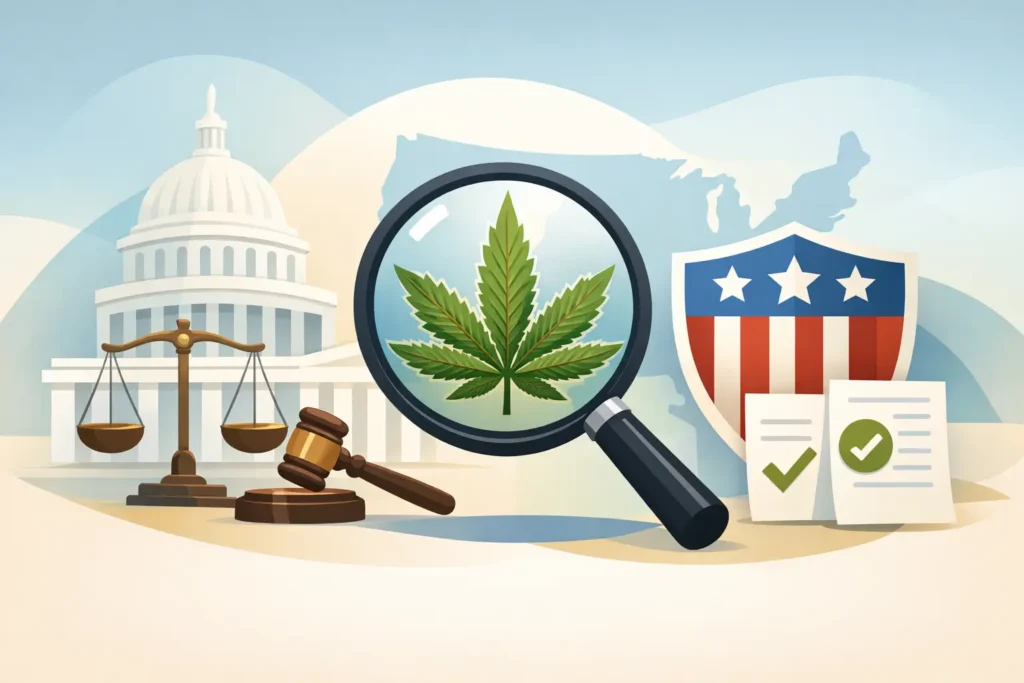
The 2018 Farm Bill removed “hemp” from the federal definition of marijuana under the Controlled Substances Act. Under that law, hemp is cannabis and cannabis derivatives containing no more than 0.3% delta-9 THC by dry weight.
That delta-9 number is the center of the modern hemp market. THCA, or tetrahydrocannabinolic acid, is a naturally occurring cannabinoid found in raw cannabis flower. In its acidic form, THCA is not delta-9 THC. When exposed to enough heat – through smoking, vaping, or cooking – THCA converts into delta-9 THC through decarboxylation.
Many hemp-derived THCA products are offered under the position that, if the product’s delta-9 THC level is at or below 0.3% by dry weight, it fits the federal hemp definition. That is why you will often see a certificate of analysis, commonly called a COA, showing low delta-9 THC alongside a much higher THCA result.
Still, calling every THCA product “federally legal” without qualification is too broad. Federal hemp law, agency rules, testing methods, enforcement posture, and state laws do not always line up cleanly. Smart buyers treat legality as a product-specific and location-specific question, not a marketing shortcut.
The total THC issue changes the conversation
Here is the detail that separates surface-level answers from real compliance awareness: federal and state programs may look at total THC, not only the delta-9 THC shown on a finished product label.
Total THC estimates the delta-9 THC that could exist after THCA converts. The standard formula generally adds measured delta-9 THC to 87.7% of the measured THCA amount. A flower with 0.2% delta-9 THC and 25% THCA may be low in present delta-9 THC, but its calculated total THC is far above 0.3%.
USDA hemp production rules use a total THC standard for hemp crops. That matters particularly for growers and pre-harvest testing. A crop that exceeds the allowable total THC threshold may not qualify as compliant hemp under a production program, even if its delta-9 THC number alone is low.
The retail landscape is more complicated. Finished hemp-derived products are frequently marketed based on their delta-9 THC concentration, while regulators and courts have not created a single, universally settled rule that resolves every THCA flower scenario. That uncertainty is not a reason to panic. It is a reason to avoid brands that refuse to show lab results, make absolute claims, or treat compliance as an afterthought.
Why smoking or vaping does not erase the legal question
Heating THCA changes its chemistry. It does not magically change the rules that applied to the product before purchase. Once heated, THCA can produce intoxicating delta-9 THC effects, which is why experienced consumers seek high-THCA flower, pre-rolls, and vapes in the first place.
But effects are not the legal test under the Farm Bill. The legal question starts with classification and testing. The practical question is whether the product is permitted where you live, whether it was sold through a compliant supply chain, and whether you can verify what is actually in it.
That distinction also matters if you travel. A product purchased lawfully in one location can create problems in another, especially where state rules treat high-THCA flower more strictly than the federal hemp framework appears to allow.
State law can be stricter than federal law
Federal hemp status is only one layer. States can regulate, restrict, or prohibit certain hemp-derived cannabinoid products within their borders. Some states focus on total THC. Some specifically regulate intoxicating hemp products or THCA flower. Others allow sales under rules that can change quickly through legislation, agency guidance, or enforcement decisions.
Shipping restrictions are not a minor checkout detail. Reputable sellers screen destinations because a product that may be available in one state may not be eligible for shipment to yours. If a brand will ship anything to anyone with no questions asked, that is not premium service. It is a red flag.
Before placing an order, check your current state and local rules, not an old social post or a friend’s experience from last year. Also remember that apartment policies, employers, schools, tribal lands, and event venues can impose their own restrictions even where hemp products are lawful.
How to assess a THCA product before you buy
Top-shelf quality should be visible before the package lands at your door. A strong flower profile and an attractive price mean more when they are backed by transparent product information.
Start with the COA for the specific batch, not a generic lab report that could apply to something else. The report should identify the product or batch and show cannabinoid results, including delta-9 THC and THCA where applicable. Check the testing laboratory, test date, and whether the report appears complete rather than cropped to highlight one favorable number.
Then look beyond potency. A meaningful safety panel may address pesticides, heavy metals, residual solvents, microbial contaminants, and mycotoxins. Not every product format raises the same concerns – flower and extracts are not identical – but a brand built for discerning customers should be willing to show its work.
Finally, assess the seller’s policies. Clear age requirements, shipping restrictions, responsible product descriptions, and accessible support signal a business that understands the difference between selling fast and building trust. Premium does not have to mean overpriced. It does mean the details should hold up.
What THCA buyers should not assume
Do not assume that a hemp label means you can use a product anywhere. Do not assume a low delta-9 THC result means the flower will be non-intoxicating after you smoke it. And do not assume THCA protects you from a drug test.
Drug tests generally look for THC metabolites, not whether the THC came from marijuana, hemp-derived delta-9, or THCA that converted during use. Using THCA flower, pre-rolls, or vapes can lead to a positive result. If testing is part of your job, athletic program, legal supervision, or professional licensing, the safest choice is to avoid THC-producing products altogether.
Likewise, never drive impaired or use intoxicating products before work, while caring for others, or in any setting where clear judgment is required. High-quality flower should elevate the experience, not lower your standards.
The practical answer for informed shoppers
So, is THCA federally legal? Hemp-derived THCA products are commonly sold under the federal hemp framework when they contain no more than 0.3% delta-9 THC by dry weight. Yet total THC rules, crop-testing standards, agency interpretations, and changing state restrictions mean the answer is not a blanket approval for every product in every place.
Buy with the same discernment you bring to choosing a strain. Verify the batch, read the lab results, respect shipping restrictions, and know your local rules before checkout. When the flower is hand-curated and the compliance is just as carefully handled, you can spend less time guessing and more time enjoying what you chose.