Lab Tested THCA Flower: What the COA Proves
A flower jar can look top-shelf, smell loud, and still leave one question unanswered: what is actually in it? Lab tested THCA flower gives discerning buyers more than a potency number. It gives them batch-specific proof they can check before they spark up, pack a cone, or add an ounce to the rotation.
That matters when you are buying hemp-derived flower online. Premium buds deserve premium receipts. A legitimate certificate of analysis, commonly called a COA, helps separate carefully curated flower from products relying on flashy strain names and vague claims. Gold in every roll starts with proof in every batch.
What Lab Tested THCA Flower Should Show You
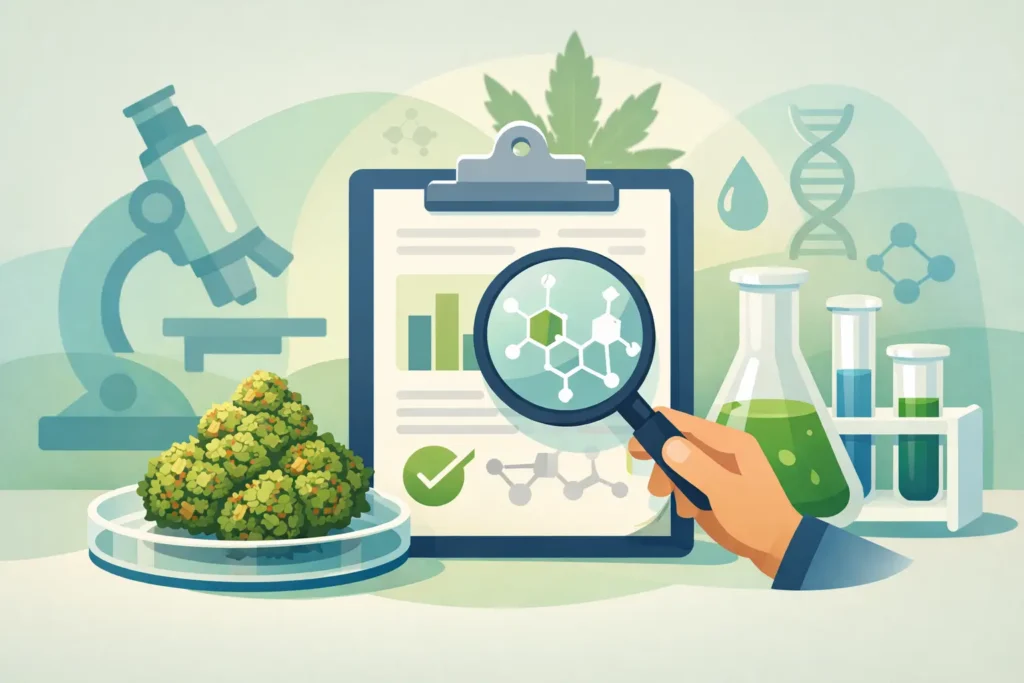
A COA is a third-party laboratory report tied to a product batch. The best reports do not simply say a product “passed.” They show measured results, the testing date, the laboratory name, and a batch or lot number that matches the flower being sold.
For THCA flower, the cannabinoid panel is usually where shoppers look first. THCA is the acidic cannabinoid naturally present in raw cannabis flower. Once heated through smoking, vaping, or cooking, THCA converts into delta-9 THC. That is why a flower’s THCA percentage can tell an experienced customer far more about its likely heated potency than a label that only highlights delta-9 THC.
Still, one percentage does not tell the whole story. Cannabinoids, terpene expression, cure quality, freshness, and your own tolerance all shape the experience. A 30% THCA strain is not automatically better than a 24% strain with a fuller aroma, cleaner burn, and effects that fit your day. Potency gets attention. Quality earns repeat orders.
A useful COA should also address the contaminants that matter in inhalable flower. Depending on the panel, that can include pesticides, heavy metals, microbial contaminants such as mold and yeast, mycotoxins, and residual solvents. Solvent testing is especially relevant to extracts and vapes, but transparent testing standards are a good sign across a brand’s catalog.
How to Read a THCA Flower COA Before You Buy
You do not need a chemistry degree to read a lab report. You do need to know which details cannot be skipped. Start with the product identity. The strain name, product type, batch number, and testing date should make sense together. If the COA is for a different strain, a random sample, or an old batch with no connection to the jar in front of you, it is not meaningful proof for that purchase.
Next, check the cannabinoid results. THCA is typically shown as a percentage by weight. You may also see delta-9 THC, CBD, CBGA, CBG, and minor cannabinoids. The report may list “total THC,” a calculated value intended to estimate the THC available after decarboxylation. A common calculation uses THCA multiplied by 0.877, then adds delta-9 THC. That 0.877 accounts for molecular weight lost during heating.
For legal hemp compliance, the delta-9 THC result is a central figure, not an afterthought. Under the federal hemp framework, hemp is generally defined by a delta-9 THC concentration of no more than 0.3% on a dry-weight basis. Federal rules are not the only rules that apply, though. State laws and shipping restrictions can differ, change, or prohibit certain hemp-derived products outright. Responsible sellers screen shipping destinations and do not treat a COA as a blank check for every state.
Then look for the pass/fail section. A credible report identifies the analytes tested, the result, and the applicable limit. “ND” means not detected at the laboratory’s reporting limit. It does not mean that a compound is impossible to detect at any level, but it is generally different from a result that exceeds a safety threshold. If a report shows a measurable result, the key question is whether it passed the stated limit.
Finally, check who performed the test. A report from an independent laboratory with clear contact information, a report number, methods, and a verifier such as a QR code is stronger than a cropped screenshot with no traceable details. QR codes are convenient, but they are not magic. Scan them, then make sure the report itself is complete and matches the product.
Potency Claims Need Context, Not Hype
High-THCA flower is for adults who know what they are shopping for. But the loudest number on the menu should not be the only number you trust. Testing is performed on a sample, and flower is an agricultural product. Natural variation can occur between buds in the same harvest, especially in larger jars and ounces.
That is not a reason to accept sloppy labeling. It is a reason to expect honest ranges, batch testing, and a brand that curates flower for more than a headline percentage. Dense structure, proper moisture, visible trichomes, aroma, trim quality, and a smooth, even burn all matter. So does whether the strain delivers the profile you actually want, whether that is fruit-forward Banana Punch, candy-like ZRuntz, bright Watermelon Punch, or a grounded Tahoe OG experience.
Terpene reports can add another useful layer. Terpenes contribute to a strain’s aroma and flavor, and they may help explain why two flower options with similar THCA levels feel distinct to a consumer. A terpene panel is a welcome sign of transparency, but it should not be used to promise medical outcomes or guarantee a particular effect. Your tolerance, setting, consumption method, and serving size still matter.
The Red Flags That Should End the Checkout
A premium price tag is not proof of premium flower. Neither is a product page full of words like exotic, designer, or gas. Walk away when a seller cannot provide a current, readable COA tied to the exact product batch.
Be equally cautious when a report only contains cannabinoid potency and omits contaminant testing, when the lab date is clearly stale, or when the product claims an implausibly huge cannabinoid number without documentation. A company that refuses to explain its testing process is asking you to supply the trust it has not earned.
There is also a difference between a real COA and a marketing badge. “Lab tested” means very little if it does not explain what was tested, by whom, and for which batch. The standard should be simple: no batch match, no confidence.
Buying for Value Without Dropping Your Standards
Testing is not only for shoppers chasing the strongest jar on the shelf. It matters just as much when you are buying a value ounce, building a bundle, or stocking up on a strain you already know you enjoy. A lower price can reflect larger-format purchasing, direct-to-consumer operations, or seasonal offers. It should never require you to guess whether the flower is properly documented.
For repeat buyers, consistency is the real flex. When the product details are clear, the COA is accessible, and the batch information is traceable, you can buy with more confidence instead of treating every order like a gamble. That is especially valuable for wholesale partners, who need inventory that looks right on the shelf and holds up when customers ask the questions that matter.
At Seigler’s, hand-curated flower is meant to feel like a top-shelf pickup without the dispensary-level price game. Value works best when it comes with visible proof, not shortcuts. A free eighth or a strong ounce deal should add to the experience, not distract from what is in the bag.
A Quick Note on Heating, Drug Tests, and Responsible Use
THCA flower is not a loophole for avoiding THC effects. Heating THCA changes it into delta-9 THC, and consuming it can be intoxicating. Start low if you are trying a new strain or format, especially after a tolerance break. Do not drive, operate machinery, or mix impairment with responsibilities that require a clear head.
THCA flower may also lead to a positive drug test after use because standard tests commonly look for THC metabolites. Do not assume a hemp label protects your employment, athletic eligibility, or legal situation. If testing is a concern, the practical choice is to avoid THC-containing products.
The right flower should make the decision easier, not murkier. Check the batch, read the COA, respect local rules, and choose the strain that earns a place in your lineup for more than its label.