How to Read Hemp COAs for Top-Shelf Flower
A QR code and a wall of lab numbers should not be the only thing standing between you and your next bag of flower. If you know how to read hemp COAs, you can separate a real batch-specific test from generic paperwork, check what is actually in the product, and shop with the confidence discerning customers expect from top-shelf hemp.
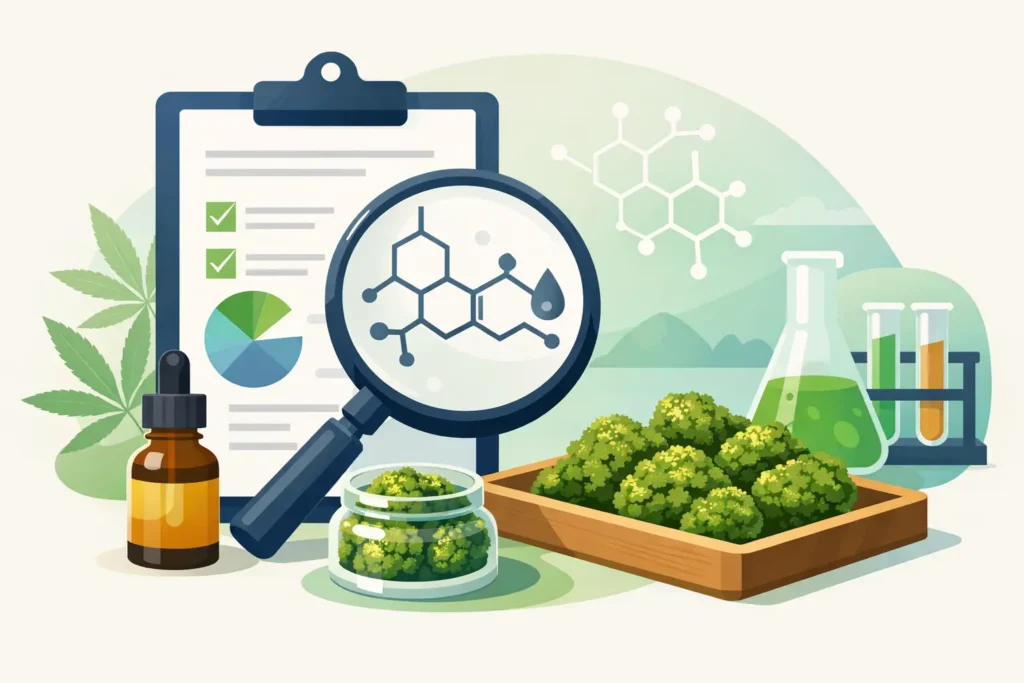
A Certificate of Analysis, or COA, is a third-party laboratory report tied to a product sample. For hemp-derived THC-A flower, it is your clearest look at potency, cannabinoid content, and whether the batch was screened for unwanted contaminants. It is not glamorous. It is also where the real receipts live.
Start With the Batch, Not the Big Percentage
The first question is simple: does this COA match the product in front of you? Look for the product name, batch or lot number, sample ID, date received, and report date. A report for a strain with a similar name is not the same as a report for your specific batch.
Freshness matters, too. Flower can change over time, especially when stored poorly. A COA that is many months old is not automatically invalid, but it gives you less certainty that the cannabinoid and terpene profile still reflects what is in the jar today. A current report tied to a current lot is a stronger signal of quality control.
Check who commissioned the test and who performed it. The producer or brand may submit the sample, while an independent laboratory runs the analysis. That separation matters. A legitimate report should clearly name the lab, include contact information, show an analyst or authorized signature, and carry a report number you can verify.
A QR code is convenient, not proof by itself. Scan it, then make sure it leads to the actual report rather than a product page or a cropped image with no identifying information. The cleanest move is a full COA with results, methods, dates, and pass/fail limits intact.
How to Read Hemp COAs for Cannabinoid Potency
The cannabinoid panel is usually the first section shoppers see, and it is where most confusion starts. Hemp flower may list CBD, CBGA, CBG, delta-8 THC, delta-9 THC, THC-A, and other minor cannabinoids. For THC-A flower, the number you will likely notice is THC-A.
THC-A is the acidic precursor to delta-9 THC. When flower is heated, a portion of THC-A converts to delta-9 THC through decarboxylation. That is why a flower product can have low delta-9 THC on the lab report while still showing a meaningful THC-A percentage.
Do not confuse THC-A with total THC. Many reports calculate total THC using this formula:
Total THC = delta-9 THC + (THC-A × 0.877)
That 0.877 factor accounts for molecular weight lost during conversion. So, for example, flower testing at 0.25% delta-9 THC and 24% THC-A has an estimated total THC around 21.3%. It can be a useful consumer potency reference, but it is not the same metric used for every compliance decision.
For federal hemp classification, the key threshold is generally delta-9 THC concentration on a dry-weight basis, not the calculated total THC number. Federal rules, state rules, shipping restrictions, and enforcement realities can differ. A COA is essential documentation, but it does not override local law or make every product shippable everywhere. Buy only if you are 21 or older, and always check the restrictions that apply where you live.
Also, do not treat the biggest percentage as an automatic quality win. A 30% THC-A claim can look loud, but potency is only one part of the experience. Genetics, cure, moisture, aroma, storage, and the rest of the cannabinoid and terpene profile all affect whether flower actually earns a top-shelf spot.
Percentages, mg/g, and the Numbers That Matter
Labs may report cannabinoids as a percentage by weight, milligrams per gram, or both. The conversion is easy: 1% equals 10 mg/g. A THC-A result of 250 mg/g equals 25% THC-A.
Pay attention to the reporting basis. For flower, dry-weight results are common because moisture can distort a straight weight comparison. If one COA uses wet weight and another uses dry weight, their percentages are not directly comparable.
You may also see ND, LOQ, or LOD. ND means not detected above the lab’s detection capability. LOQ means limit of quantitation, the lowest level the lab can measure reliably. A result marked “< LOQ” is not necessarily zero. It means the compound was below the level the lab can confidently quantify.
Do Not Skip the Safety Panels
A potency-only report tells you how much of a compound was measured. It does not tell you whether the flower was screened for contaminants. For a cleaner purchase, look for separate panels covering the risks relevant to the product type.
For hemp flower, the most useful panels commonly include:
- Pesticides to identify agricultural residues that should not be in premium flower.
- Heavy metals such as lead, arsenic, cadmium, and mercury, which plants can absorb from soil.
- Microbials such as Salmonella, E. coli, yeast, and mold, especially important for smokable products.
- Mycotoxins produced by certain molds and fungi.
- Residual solvents when the product contains extracts, including many vapes and infused pre-rolls.
Plain flower may not require a residual-solvent panel in the same way a vape cartridge does, because flower is not necessarily made with extraction solvents. Still, a comprehensive report is a stronger standard when available. For vapes, concentrates, and infused products, solvent screening should be non-negotiable.
Look for a clear “pass” result paired with the laboratory’s limit. “Pass” without an analyte list, a limit, or a method provides less useful information. “Not detected” is encouraging only when the report also tells you what level the lab was capable of detecting.
Read Terpenes Like a Quality Signal, Not a Promise
A terpene panel can help explain why one strain smells like citrus and gas while another leans sweet, earthy, or floral. Common terpenes include myrcene, limonene, caryophyllene, pinene, and linalool. Their presence supports a fuller picture of the cultivar and cure.
But a terpene profile is not a guarantee of a specific effect. Everyone responds differently, and marketing that promises an exact feeling from a terpene percentage is overselling the science. Use the panel to compare aroma, flavor direction, and product character, not as a medical claim or a certainty about how your night will go.
A surprisingly low total terpene result can also be a clue to look closer. It may reflect old flower, weak storage, a muted cultivar, or a report that simply does not capture the whole sensory experience. Use your eyes and nose when you can, but let the lab report keep the quality conversation honest.
Spot Red Flags Before You Checkout
The easiest COA to read is one that has nothing to hide. Be cautious when a brand offers only a screenshot, a report with no batch match, no test date, or a cannabinoid panel with no contaminant data. The same goes for reports that have altered formatting, missing lab details, or a QR code that loops back to a storefront instead of the laboratory document.
Another red flag is a product label that makes a huge potency claim while the COA does not support it. If the package says 28% THC-A and the report says 18%, ask questions. Natural variation exists in agricultural products, but the gap should not be ignored.
Finally, remember that testing is only as good as the sample. A COA shows what the lab received, not a magic guarantee that every bud in every bag is identical. Trust is built when the report is batch-specific, recent, complete, and easy to access – then reinforced by consistent product quality when it reaches your door.
Make the COA Part of Your Standard
The best hemp purchases do not ask you to choose between premium smoke and straight answers. Before you buy, match the lot, read the delta-9 THC result, understand the THC-A figure, and check for meaningful contaminant screening. That takes a few minutes, but it protects your standards long after the hype fades.
At Seigler’s, top-shelf quality is meant to be visible, not vague. Keep the COA in your rotation of buying habits, right alongside strain, freshness, price, and the kind of flower you are proud to keep in the stash.