Retailer Guide to COA Compliance for Hemp
A top-shelf jar, a sharp label, and a strong strain name can earn attention. The COA is what earns trust when a customer, regulator, or wholesale buyer asks what is actually inside. This retailer guide to COA compliance is built for hemp retailers who want premium flower, pre-rolls, and vapes on the shelf without gambling on paperwork, potency, or product safety.
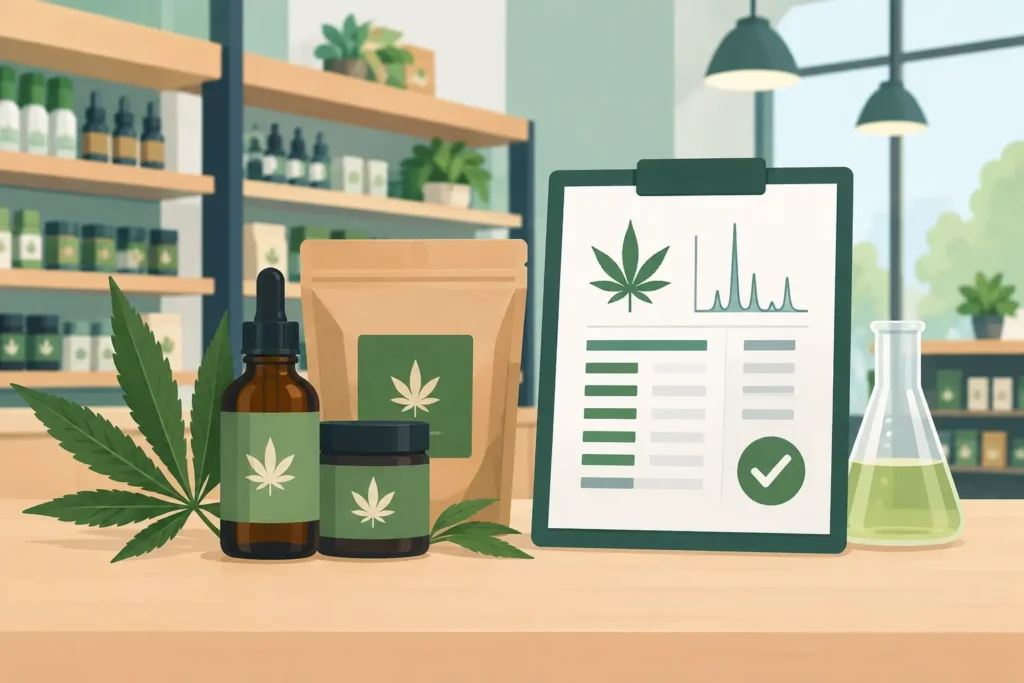
For hemp-derived THC-A, a Certificate of Analysis is not a decorative PDF. It is the document connecting a specific product batch to independent laboratory results. Handle it right and it protects your customers, your reputation, and the margin you worked to earn. Handle it casually and a great-looking product can become expensive dead weight.
Why COA Compliance Starts Before the Product Lands
Retailers are often handed a COA after they have already committed to inventory. That is backwards. A supplier should be able to provide complete, readable, current testing documentation before you place a wholesale order, not after cartons arrive at your store.
The first question is simple: does this COA belong to this exact batch? Product names repeat. Strains get renamed. Packaging changes. A generic report for “THC-A flower” is not enough if the product in front of you is a specific lot of ZRuntz pre-rolls or a particular vape run. The lot or batch number on the COA should match the lot or batch number on the product, invoice, or supplier’s production records.
That match matters because cannabinoid levels and contaminant results can shift from harvest to harvest and from run to run. A clean result from last season does not prove the current inventory is clean. Premium retail means being precise, not assuming every bag with the same strain name carries the same data.
What a Retail-Ready COA Should Show
A credible COA identifies the lab, the client or manufacturer, the sample, and the test results. It should also include the date tested, the method or panel used, and a report or sample identification number that gives the document a real trail back to the product.
Start with cannabinoid potency. For hemp-derived THC-A products, you will commonly see THCA, delta-9 THC, CBD, CBDA, CBG, and other cannabinoids listed in percentages or milligrams per gram. Make sure the units are clear. A number that looks impressive without a unit is not useful for retail decisions or accurate product descriptions.
Do not confuse THCA percentage with delta-9 THC percentage. THCA can convert to delta-9 THC when heated, which is central to the consumer experience of flower, pre-rolls, and vapes. But legal definitions, shipping rules, and state-level requirements may look at cannabinoid information differently. A COA can provide lab results. It does not replace a current legal review of the jurisdictions where you operate or ship.
For hemp products, retailers should pay close attention to the reported delta-9 THC result and whether the supplier has documented compliance with applicable federal and state rules. The federal hemp framework has historically centered on a delta-9 THC threshold on a dry-weight basis, while state laws, enforcement priorities, and rules around total THC can vary sharply. If your state takes a stricter view, a product that appears acceptable in another market may not be right for your shelf.
Potency is only one part of the standard. A serious COA program also looks for contaminants that can turn a premium product into a customer-service problem:
- Pesticides, which matter especially for inhalable flower and concentrates.
- Heavy metals, including lead, arsenic, cadmium, and mercury.
- Microbials such as yeast, mold, E. coli, and salmonella.
- Residual solvents for extracts, vapes, and any product made using solvent-based processing.
- Mycotoxins and foreign material when relevant to the product and testing panel.
A “pass” mark should be tied to actual results and stated limits, not merely a supplier promise that the product was tested. If a report only covers potency, call it what it is: a potency report. It is not a full safety profile.
Read the Fine Print, Not Just the Pass/Fail Box
The most useful COAs show both the result and the laboratory’s reporting limit or limit of quantitation. “ND” means not detected at the lab’s stated detection capability. It does not necessarily mean a substance is absent at every conceivable level. That distinction is normal science, not a reason to panic, but it is why retailers should look for a clear lab panel and applicable limits.
Also check sample dates. A report from months ago may be appropriate for a stable sealed product, or it may be stale for fresh flower that has changed hands, been repackaged, or sat in questionable storage. It depends on the product, its packaging, and your state requirements. Fresh inventory deserves fresh documentation.
Build a COA Review Process Your Team Can Repeat
Compliance breaks down when it lives in one employee’s inbox. Create a repeatable receiving process that anyone responsible for purchasing or inventory can follow. It does not need to be complicated, but it does need to happen every time.
Before approving a new supplier, request a representative COA and ask how the company ties lab reports to lots. When ordering, require COAs for the exact lots being shipped. At receiving, compare the physical product and invoice against the report. Then store the report in a shared, organized location by supplier, product, and lot number.
Your team should be able to answer four questions quickly: What batch is this? Where is its COA? Does the report cover the needed panels? Is this batch approved for sale in our market? If it takes an hour to find the answer, your system is not retail-ready yet.
Keep records longer than the time the product sits on the shelf. A customer question, chargeback, recall, or agency inquiry may come after a batch sells through. Retaining purchase records, batch information, COAs, supplier communications, and any corrective actions gives you a defensible trail. Your accountant may organize documents by invoice. Your compliance files should organize them by product lot as well.
Product Claims Must Match the Lab Report
The fastest way to create unnecessary exposure is to let marketing outrun the COA. If a jar says 30% THCA, the applicable report should support that number for that product lot, allowing for any lawful labeling tolerances in your market. If the report shows a range across lots, avoid presenting a single potency figure as permanent.
The same discipline applies to language like “pesticide-free,” “solvent-free,” or “lab-tested.” These claims can be valuable, but only when the COA and testing scope back them up. “Lab-tested” should not imply a full-panel contaminant screen if the supplier only tested cannabinoids. Discerning customers notice the difference, and so do regulators.
QR codes can make verification easier, but they are not a substitute for verification. Scan the code before stocking a product. Confirm that it opens a real report for the same batch, not a generic landing page or a polished image with no lot data. If the code is dead, the lot is missing, or the report is unreadable, pause the sale until the supplier resolves it.
Know When to Reject a Batch
Sometimes the right inventory decision is no. Reject, quarantine, or hold a batch when the COA does not match the label, lacks a report date or identifying details, shows failed results, omits critical panels for the product category, or comes from a lab report you cannot authenticate.
That can feel painful when the strain has demand and the price is attractive. But a cheap case that creates returns, customer distrust, or legal trouble is not a deal. Your shelves should signal that every product has been chosen with the same discernment your customers bring to buying it.
If a supplier corrects a paperwork issue, document the correction and make sure it applies to the exact inventory on hand. Do not accept a new COA for a different lot as a cure for an old lot. If results fail a safety panel, do not rely on a verbal explanation. Ask for written documentation, identify affected units, and follow your state’s rules on holds, disposal, or reporting.
COA Compliance Is a Retail Advantage
A customer does not always ask to see a COA. A strong retailer is ready anyway. Train staff to explain, in plain language, that a COA verifies a product’s tested batch, cannabinoid profile, and relevant safety screening. Avoid legal promises or medical claims. Be clear about what the document confirms and when staff should escalate a detailed question.
For wholesale partners, dependable documentation is part of the product. Seigler’s approach to premium hemp inventory is built around the same standard: hand-curated quality should arrive with the proof to support it. Great flower earns repeat buyers. Clear batch records help keep those buyers confident after the first purchase.
Keep your standards high even when demand is hot. The best time to build a clean COA process is before a product becomes your fastest seller, because trust is easiest to protect before it has to be repaired.