How to Identify Premium Buds Before You Buy
A bag can look loud under bright lights and still smoke flat. Real top-shelf flower shows its quality before the first grind, then proves it again in the aroma, the cure, the burn, and the lab results. Knowing how to identify premium buds keeps you from paying premium prices for dry, rushed, or poorly handled flower.
For discerning customers, the goal is not to chase one flashy trait. A huge THC-A number, purple color, or dense nug can be part of the picture, but none of them tells the whole story. Premium flower is the result of good genetics, careful cultivation, a patient dry and cure, proper storage, and honest testing.
How to Identify Premium Buds at First Look
Start with the bud structure. Quality flower should look intentionally grown, not beaten up by processing. Well-trimmed buds have a defined shape with visible calyxes, enough sugar leaf left to protect the trichomes, and no excessive loose leaf or shake. The trim does not need to be stripped bare. In fact, an overly shaved bud can lose much of the resin that carries flavor and character.
Density matters, but it depends on the strain. An indica-leaning cultivar such as Tahoe OG may naturally present tighter, heavier flowers, while some sativa-leaning or fruit-forward strains can be airier by design. A premium bud should feel substantial for its size without being rock-hard. Flower that is unusually dense and compact may have been compressed in packaging, while buds that feel hollow or crumble immediately can signal age or an improper cure.
Color is another clue, not a final grade. Healthy green tones, deep purple accents, orange pistils, and lime highlights can all appear in high-end flower. What you do not want is a dull brown cast, gray fuzz, suspicious white patches, or a yellowed, lifeless look. Those can point to degradation, poor storage, or in the worst case, contamination.
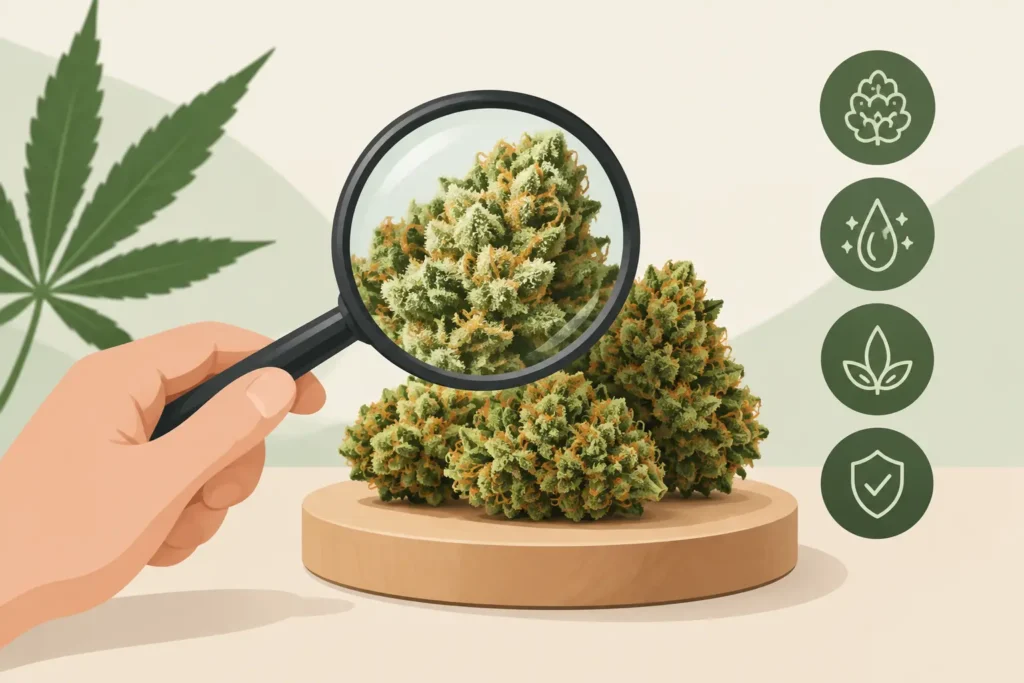
The real visual flex is trichome coverage. Trichomes are the tiny, resinous glands that can give flower a frosted appearance. Under good light, premium buds often show a visible sparkle or crystal layer rather than a dusty coating. These glands hold many of the cannabinoids and terpenes responsible for potency, aroma, and the strain’s individual profile. A flower coated in intact trichomes usually signals careful handling, although photography and added lighting can make any bud look frostier online than it is in person.
Aroma Tells You How the Flower Was Treated
Fresh flower should announce itself when the seal breaks. Depending on the cultivar, that may mean gas, citrus, candy, tropical fruit, pine, earth, cream, or pepper. Strains like ZRuntz, Banana Punch, and Watermelon Punch should have a profile that feels recognizable and full, not faintly sweet in a generic way.
The key is depth. Premium buds often have layers to their aroma. You may catch fruit first, then cream, fuel, or spice underneath. That complexity comes from a healthy terpene profile and careful post-harvest handling. Terpenes are volatile, so heat, oxygen, and time can strip away the very character that makes a strain worth buying.
Watch for hay, mildew, basement, ammonia, or stale cardboard notes. A grassy smell can indicate flower that was dried or cured too quickly. Ammonia is a serious red flag and can suggest excess moisture or microbial problems. If the flower barely smells like anything at all, it may be old, overly dry, or stored in conditions that allowed the terpenes to fade.
When shopping online, you cannot smell the jar before checkout. That makes transparent strain descriptions and current lab documentation more valuable. Product photos can set expectations, but a retailer willing to show what is in the flower earns more trust than one relying on hype alone.
The Cure Separates Loud Flower From Great Flower
A proper cure is where premium flower earns its price. After harvest, growers dry and cure buds to preserve cannabinoids, develop the terpene profile, and create a smooth smoking experience. Rush this stage and even elite genetics can turn harsh, flavorless, and disappointing.
Gently press a bud between your fingers. It should have a little spring and stickiness, not turn to powder. A slight tacky feel usually means the resin is still present and the moisture level is balanced. If it feels brittle, dusty, or sheds trichomes at the lightest touch, it has likely dried out. If it feels wet, spongy, or difficult to break apart, it may not have been cured properly.
The burn is useful evidence, too, but it should not be treated as a laboratory test. Well-cured flower generally burns evenly, tastes clean, and does not punish your throat with every pull. Dark ash alone does not automatically mean poor quality. Roll technique, humidity, papers, and combustion all affect ash color. Focus more on whether the flavor stays present and whether the flower feels smooth for its potency.
Potency Is More Than a Big THC-A Number
THC-A percentage matters, especially for customers seeking a potent experience after heating, but the highest number on the menu is not automatically the best buy. A well-grown 22% THC-A flower with rich terpenes, a clean cure, and strong freshness can deliver a more satisfying session than a dry 30% option with no aroma.
Think of potency as part of the entourage, not the entire experience. Cannabinoids, terpenes, freshness, and your own tolerance all influence how a strain feels. Customers looking for heavy, end-of-day effects may prefer an earthy, gas-forward profile. Others may want bright fruit, citrus, or candy notes for a different kind of session. Premium means the flower does what its profile promises with clarity and consistency.
Be skeptical of products marketed only around extreme potency. If there is no information about the cultivar, terpene character, batch testing, or handling, the percentage is doing all the selling. Top-shelf quality should never need to hide behind one oversized number.
Lab Results Are the Non-Negotiable Check
For legal hemp-derived THC-A flower, third-party lab testing is one of the strongest trust signals available. A certificate of analysis, often called a COA, should connect to the batch you are considering and provide cannabinoid information. It should also support the product’s hemp compliance under applicable federal and state rules.
The best testing practices go beyond a cannabinoid panel. Look for evidence that the product has been screened for contaminants such as pesticides, heavy metals, residual solvents, mycotoxins, and microbial impurities when applicable. Not every report is formatted the same way, but the retailer should make the information understandable rather than treating it like a secret.
Lab reports cannot tell you whether a bud is fresh, fragrant, or beautifully cured. That is why testing and sensory quality work together. A clean COA confirms a vital baseline. The flower itself should still look alive, smell distinct, and arrive in packaging designed to protect it from light and air.
Packaging and Retailer Standards Matter
Premium buds can lose their edge long before they reach your door if they are packaged carelessly. Proper packaging helps preserve moisture, trichomes, and aroma while keeping the product discreet and protected in transit. A retailer should also be direct about age requirements, shipping restrictions, and where its products can legally be sent.
Price deserves context here. Affordable ounces are not automatically lower grade, and expensive flower is not automatically top shelf. The better question is whether the product delivers visible quality, meaningful testing, fresh handling, and a strain profile you actually want. Value is getting properly curated flower without paying a luxury tax for a logo.
At Seigler’s, that standard is about hand-curated THC-A flower that gives customers a clear shot at top-shelf quality without forcing them into dispensary-level pricing. The right bud should look intentional, smell unmistakable, and feel worth opening again.
Trust your senses, but give them receipts. Choose flower with life in the trichomes, character in the aroma, balance in the cure, and testing behind the claims. That is where the cleanest, most satisfying sessions begin.