How to Verify Cannabinoid Testing Before You Buy
A product page can promise top-shelf flower and heavy-hitting potency all day. The proof is in the paperwork. Knowing how to verify cannabinoid testing means you can separate a real, batch-tested hemp product from a generic lab report posted for appearances.
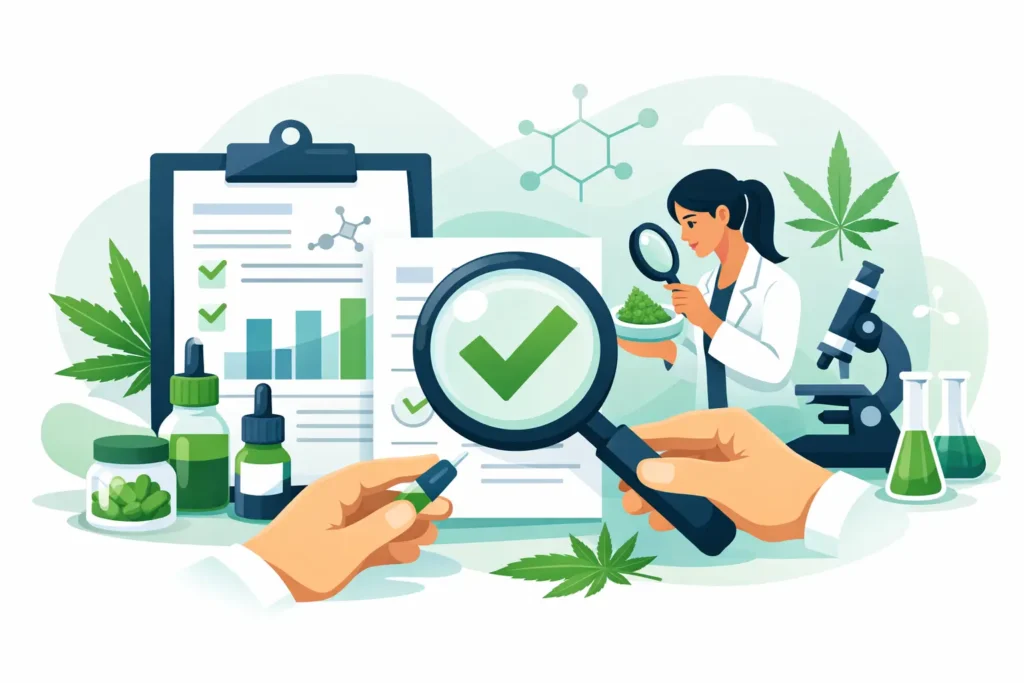
For discerning customers, a certificate of analysis, usually called a COA, is not filler. It is the receipt for purity, potency, and accountability. A clean COA does not automatically tell you whether you will love a strain’s flavor or effects, but it gives you a far better read on what you are actually buying.
Start With a Product-Specific COA
The first rule is simple: the COA must match the product in your cart. Look for a QR code, batch number, lot number, or product identifier on the package and compare it with the report. A retailer may carry several batches of the same strain, and potency can vary from harvest to harvest. A report for last season’s flower is not meaningful proof for the jar shipping today.
The product name should also make sense. If you are buying a THC-A flower labeled Tahoe OG, a report for a vague “hemp flower sample” with no identifying details deserves questions. Some labs use internal sample names, so exact branding is not always required. But there should be a clear path from the report back to the item: matching lot number, sample description, date, and seller information.
Check the dates, too. The collection date tells you when the lab received or sampled the product. The report date tells you when the analysis was completed. Fresh testing is generally better, especially for flower and vapes, but the right timeline depends on the product and how it was stored. What matters most is that the report belongs to the current inventory, not an unrelated sample from months or years ago.
How to Verify Cannabinoid Testing Results
Once you know the report belongs to the product, move to the cannabinoid panel. This is where the lab lists compounds such as THCA, delta-9 THC, CBD, CBDA, CBG, and others detected in the sample.
For THC-A flower, pay attention to both THCA and delta-9 THC. THCA is the acidic precursor that converts to THC when heated. That is why experienced buyers look beyond one flashy number and read the entire panel. A product with high THCA may be potent after combustion or vaporization, but its legal classification and shipping eligibility can still depend on the applicable rules where you live.
You may also see “total THC.” Labs often calculate it with this formula:
Total THC = delta-9 THC + (THCA × 0.877)
The 0.877 adjustment accounts for molecular weight lost during conversion. This number can help you understand the product’s potential after heating. It should not be confused with the measured delta-9 THC result, and it should never replace checking your local laws. Hemp rules, enforcement priorities, and state shipping restrictions can differ substantially.
Potency is usually shown as a percentage by dry weight and sometimes as milligrams per gram. A 25% THCA result means roughly 250 milligrams of THCA per gram of flower. That is a useful benchmark, but it is not the whole quality story. Cure quality, terpene retention, freshness, moisture, and your own tolerance all shape the experience.
Do not chase the highest percentage blindly. An inflated or poorly documented 35% claim is less valuable than a believable, batch-matched result from a reputable lab. Premium is not just loud numbers. It is traceable numbers.
Read the Full Safety Panel, Not Just Potency
A cannabinoid panel confirms what is present. A complete safety panel helps show what should not be there. For flower, pre-rolls, and vape products, look for testing categories that fit the product type and its potential risks.
A strong COA often includes results for pesticides, heavy metals, microbial contamination, mycotoxins, residual solvents, and sometimes foreign material or moisture. Not every category applies equally to every product. Residual solvent testing is particularly relevant for extracts and vape oils, while microbial and mycotoxin screening matter greatly for plant material.
The result you want to see is usually “ND,” meaning not detected, or a reported amount below the lab’s limit of quantitation. Do not mistake ND for a magical guarantee of zero. It means the lab did not detect the compound above the stated threshold using that test method. That is still useful information, especially when the report clearly lists the testing limits.
A “pass” label is helpful, but do not stop there. See whether the actual analytes and limits are visible. A COA that only says “passed” without showing what was tested gives you less to work with. Transparency is the point.
Make Sure the Lab Looks Legitimate
A polished PDF can be copied, edited, or attached to the wrong product. Verify the laboratory as well as the sample. The report should identify the lab, include contact information, show an analyst or authorized signature, and carry a report or sample ID that can be checked.
Many reputable cannabis and hemp labs operate under ISO/IEC 17025 accreditation, a quality standard for testing laboratories. Accreditation is a strong positive signal, though the details matter: the lab’s accredited scope should cover the kinds of testing it performs. If a COA is hard to read, lacks a lab identity, has no sample ID, or appears to be a cropped screenshot, treat it as a red flag.
If a QR code takes you to a report, make sure it leads to the actual COA or a lab-hosted verification page, not simply a product page repeating marketing claims. The best reports are easy to trace from package to seller to lab.
Red Flags That Deserve a Second Look
A single issue does not always mean a product is bad. Administrative mistakes happen, and labs format reports differently. But several of these signals together should make you pause:
- The COA has no batch, lot, sample, or report number.
- The product and report names do not connect in any clear way.
- Testing dates are old compared with the inventory being sold.
- The cannabinoid panel is present, but no contaminant screening is shown.
- Reported potency looks unusually high while supporting details are missing.
- The lab name cannot be verified or the document looks altered.
- The seller will not answer a straightforward question about testing or batch matching.
Trustworthy brands do not make customers work like detectives just to find basic product documentation. They make it easy to see what was tested, when it was tested, and what batch you are receiving.
Ask Better Questions Before Checkout
When a COA is available but something remains unclear, ask the retailer whether the report is tied to the current batch and whether full-panel testing is available for that exact product. For vapes, ask whether the oil was screened for residual solvents and heavy metals. For flower, ask whether microbial, pesticide, and mycotoxin results are included.
This is also the moment to think about your personal needs. If you are sensitive to certain cannabinoids, want lower potency, or are choosing a product for a specific time of day, the full cannabinoid profile can guide your decision better than a strain name alone. Terpene results may add useful context for aroma and flavor, but they are not a promise of a specific effect.
Finally, keep the legal reality in view. Hemp-derived THC-A products may be restricted by state or local law, and cannabinoids can produce a positive drug test. A COA verifies a product’s laboratory results. It does not guarantee legality in every location, a particular experience, or a negative drug screen.
The cleanest purchase is the one you can trace. Before you commit to a new jar, pre-roll, or vape, take two minutes to match the batch, read the full panel, and verify the lab. That small check protects your standards and keeps your money focused on flower that earns its top-shelf reputation.