How to Compare Hemp Strains Before You Buy
That loud-looking flower can still be the wrong pick for your session. A frosty bag, a huge potency number, or a familiar strain name only tells part of the story. Knowing how to compare hemp strains means looking past the hype and reading the details that separate ordinary flower from the top-shelf kind worth keeping in rotation.
For experienced buyers, the goal is not to find the single “best” strain. It is to find the right flower for your taste, timing, tolerance, and budget – then know you are getting what the label promises. Here is how discerning customers size up a hemp strain before checking out.
How to Compare Hemp Strains Beyond the Name
Start with this: strain names are useful shorthand, not a guarantee. A name like Tahoe OG, Banana Punch, or Watermelon Punch can hint at a familiar flavor family or lineage, but the actual experience depends on the specific batch, its cannabinoid profile, terpene expression, cure, and freshness.
That matters because two growers can offer flower under a similar name and produce noticeably different results. One batch may lean creamy and fruit-forward, while another feels earthier, denser, or more gas-heavy. Treat the name as your first clue, not your final decision.
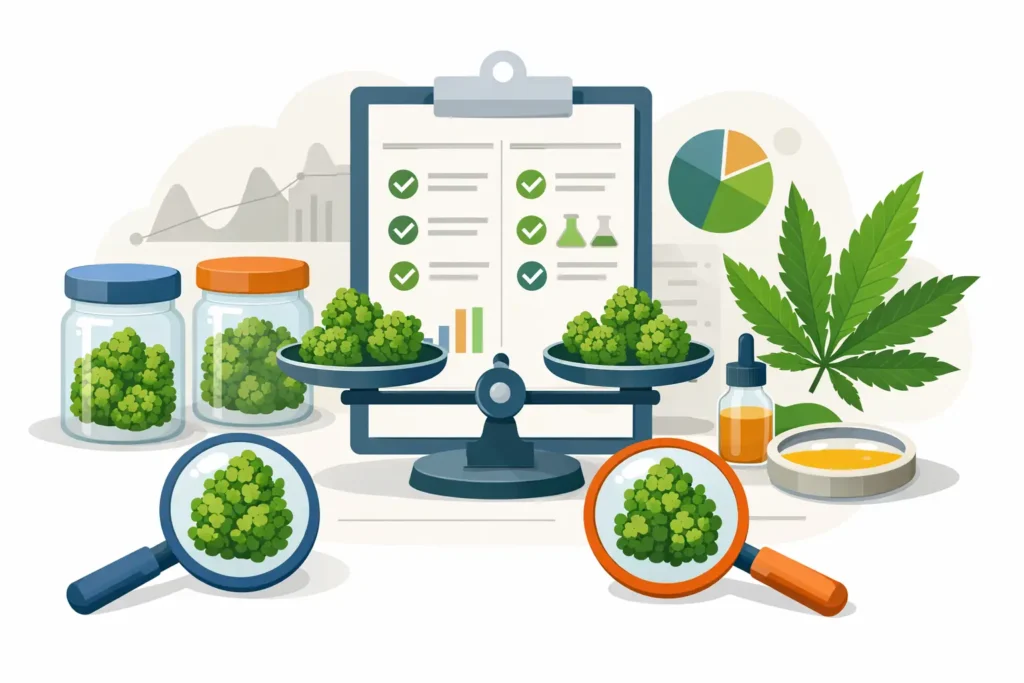
The better move is to compare the complete product profile. Look at the stated cannabinoids, available lab results, flavor notes, flower photos, and descriptions of the intended feel. When those details line up, you have more than a catchy name. You have a clearer read on what is actually in the jar.
Know what type of session you want
Before comparing products, decide what you want from the session. Are you looking for a mellow evening smoke, a flavorful social option, a heavier end-of-day pick, or something balanced enough for a weekend afternoon? Your answer gives the comparison a purpose.
Terms such as indica, sativa, and hybrid can be a helpful starting point, especially if you already know what tends to suit you. Still, they are broad categories. A hybrid does not automatically feel the same from one cultivar or batch to the next. Use those labels alongside the cannabinoid and terpene details instead of relying on them alone.
If you are newer to hemp-derived THC-A flower, start conservatively. THC-A converts to delta-9 THC when heated, and potency can feel very real. Your own tolerance, setting, method of consumption, and serving size all matter.
Compare Cannabinoids, Not Just THC-A Percentage
Potency gets attention because it is easy to compare. A strain listed at 28% THC-A looks stronger than one listed at 20%, but that difference does not automatically tell you which flower will be more enjoyable or more suitable for you.
A high THC-A percentage may appeal to seasoned customers chasing a more intense experience. But a balanced cannabinoid profile can deliver a fuller, more comfortable session for someone who values flavor, clarity, or a less overwhelming ride. The highest number is not always the best buy.
When available, look beyond THC-A to total cannabinoids and minor compounds. CBD, CBG, CBC, and other cannabinoids can influence the character of a strain, even when present in smaller amounts. A well-rounded profile may be more appealing than a one-note potency play.
Also check how the seller presents the numbers. Is the THC-A percentage tied to a batch-specific certificate of analysis? Is the product description clear about what is being measured? Premium flower should not make you guess.
Read the COA like a buyer who knows better
Third-party lab testing is where confidence starts. A certificate of analysis, often called a COA, should help verify cannabinoid content and screen for contaminants. Exact test panels vary, but a credible report should match the product or batch you are considering and come from an identifiable laboratory.
When reviewing a COA, compare the batch or lot information with the product listing where possible. Check the cannabinoid results first, then look for testing related to pesticides, heavy metals, microbial contaminants, residual solvents, and mycotoxins when those results are provided.
A lab report is not a decorative badge. It is part of the product. If a retailer takes purity seriously, transparency should be easy to find and easy to understand.
Let Terpenes Lead the Flavor Conversation
Cannabinoids help tell the potency story. Terpenes tell you a lot about aroma, flavor, and the personality of the flower. These natural aromatic compounds are why one strain can smell like ripe fruit and cream while another brings pine, pepper, fuel, citrus, or deep earth.
You do not need to memorize every terpene to shop smarter. Start by noticing the profiles you enjoy. If you like bright, citrus-forward flower, you may gravitate toward strains with limonene in the conversation. If peppery, gassy notes are your lane, caryophyllene may show up often. Myrcene is commonly associated with earthy, musky, and fruit-rich profiles, while pinene can bring a crisp pine note.
Terpene language is not a promise of a medical outcome, and no two people respond exactly the same way. It is a practical way to compare sensory preferences. Over time, your nose becomes one of your best shopping tools.
A strain description that simply says “strong” tells you almost nothing. A description that tells you whether the flower is candy-sweet, tropical, creamy, diesel-forward, or OG-heavy gives you something useful to compare. That is the difference between buying blind and buying with intent.
Judge the Flower You Can See
Photos cannot replace opening a fresh package, but they can reveal whether a retailer takes presentation and handling seriously. Look for well-trimmed buds, visible trichome coverage, healthy color, and a structure that fits the cultivar. Dense flower is not always superior, but it should look properly grown and carefully handled.
Avoid treating extreme frost as the only marker of quality. Trichomes matter, but so do cure and moisture. Flower that is overly dry can burn fast, taste harsh, and crumble into dust. Flower that feels too wet may not have been cured properly and can be difficult to enjoy. The sweet spot is sticky enough to show life, dry enough to break down cleanly, and fragrant when you open it.
Freshness is a value issue, not a minor detail. A lower-priced ounce is a serious score when the buds still carry aroma, body, and flavor. It is not a deal if the flower has been sitting around long enough to lose what made the strain special.
Compare format and price honestly
An eighth is a smart way to test a strain. An ounce makes more sense when you already know the cultivar fits your preferences or when the value is simply too good to ignore. The right format depends on how often you consume, how much variety you keep around, and whether you are buying for solo sessions or a shared stash.
Do the price math by gram, but do not stop there. Compare the quality signals behind the price: testing, cannabinoid profile, batch care, cure, and the retailer’s reputation for consistency. Cheap flower that disappoints is not value. Top-shelf quality at a fair per-gram price is.
Pre-rolls offer convenience, especially when you want a ready-to-go option without grinding or rolling. Flower gives you more control over freshness, pack size, and consumption method. Neither is automatically better. Choose based on how you actually use your hemp, not on what looks best in a product photo.
Build a Personal Strain Shortlist
The fastest way to get better at comparing strains is to keep track of what works for you. After trying a new flower, make a quick note on aroma, flavor, intensity, timing, and whether you would buy it again. A few honest notes beat trying to remember every session weeks later.
You may find that you consistently return to fruit-forward dessert profiles, classic OG gas, or balanced hybrids with a smoother feel. That pattern is more valuable than chasing every new strain drop. It helps you recognize a winner before it sells out and makes larger-format purchases easier to justify.
For a first order, choose a strain that matches a flavor or profile you already enjoy, verify the lab information, and buy an amount that fits your confidence level. At Seigler’s, the standard is hand-curated flower with lab-tested quality and real value built into the order – because premium should feel obvious from the first look to the last pull.
The best strain comparison ends with a flower you are glad you bought, not a label you were talked into. Trust the test results, follow your palate, respect your tolerance, and let each session sharpen your standards.