Wholesale Versus Retail Hemp Pricing Explained
A premium ounce should not feel like a luxury tax. That is the real conversation behind wholesale versus retail hemp pricing: why the same category of hemp-derived THC-A flower can carry very different price tags, and what buyers at every level are actually paying for.
For the customer, a fair retail price means top-shelf flower, clear lab testing, and value that holds up when the package lands at the door. For a smoke shop or hemp retailer, a fair wholesale price must leave room to build a business without cutting corners on quality. Both sides need the same thing: clean product, dependable supply, and pricing that makes sense.
Wholesale Versus Retail Hemp Pricing: The Core Difference
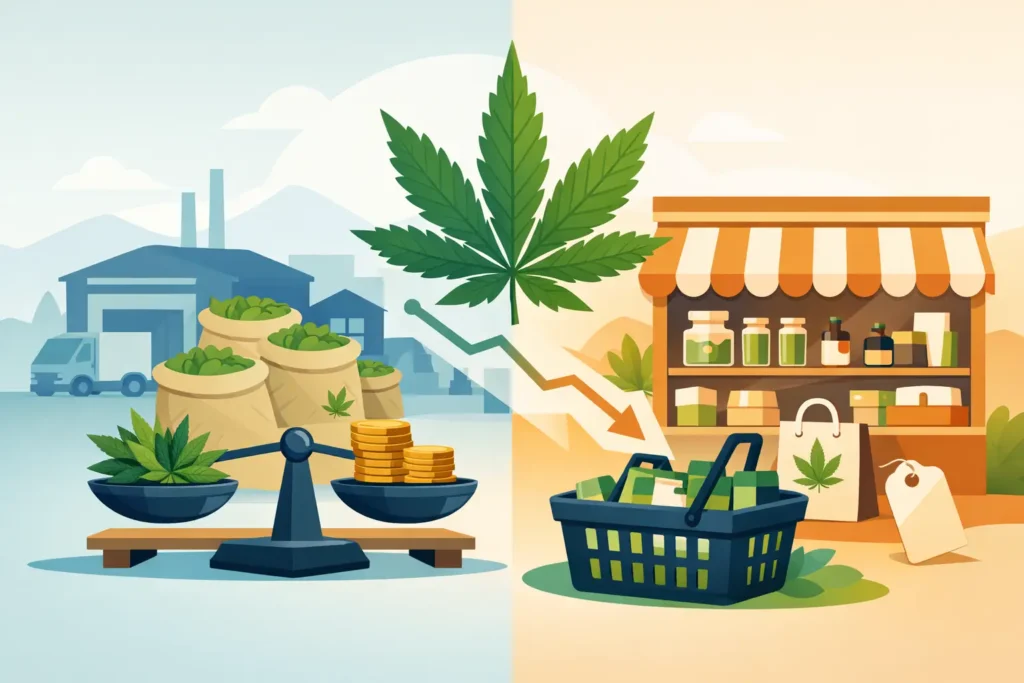
Wholesale is the price paid by a business buying inventory in volume. Retail is the price paid by the final customer buying that inventory in smaller quantities. The gap between those numbers is not automatically markup for markup’s sake. It covers the work required to make a product accessible, compliant, properly presented, and available when customers want it.
At wholesale, a retailer might purchase multiple pounds of flower, cases of pre-rolls, or a larger run of vapes at a lower per-unit cost. The supplier benefits from moving meaningful volume at once. The retail partner takes on the responsibility of storing it, merchandising it, educating customers, processing payments, handling local operating costs, and carrying the risk that a strain may move slower than expected.
Retail buyers get flexibility. They can choose an eighth, a quarter, a pre-roll, or an ounce without committing to bulk inventory. They also get the convenience of curated options, consumer-ready packaging, promotions, loyalty rewards, and discreet delivery where permitted. That smaller purchase size generally means a higher per-gram price, but it should also mean a finished shopping experience and a product worth returning for.
What Actually Sets Hemp Prices
The lowest listed price rarely tells the whole story. In hemp-derived THC-A, price should be read alongside quality, traceability, and freshness. A cheap bag is not a win if the flower is dry, poorly trimmed, inconsistently cured, or unsupported by current third-party testing.
Cultivation and genetics
High-performing genetics, attentive cultivation, controlled drying, and a patient cure all cost money. Dense, aromatic flower with visual appeal and a strain-specific character does not happen by accident. Whether a customer reaches for ZRuntz, Banana Punch, Watermelon Punch, Tahoe OG, or another cultivar, the experience starts long before the flower is weighed and packaged.
Outdoor, greenhouse, and indoor production can all have a place in the market, but they do not carry the same cost structure or necessarily deliver the same result. Indoor flower often commands more because growers can exert greater control over light, environment, and harvest cycles. That does not mean every indoor crop deserves a premium or every greenhouse crop is second-rate. It means shoppers and retail partners should judge the actual flower, not a label alone.
Testing and legal compliance
Responsible hemp pricing accounts for compliance. Hemp-derived products sold as federally compliant must meet applicable legal requirements, while state rules and shipping restrictions can vary. Reputable businesses also invest in third-party lab testing to verify cannabinoid content and screen for relevant quality and safety factors.
Those reports are not decoration. They are part of the trust equation, particularly for discerning customers purchasing THC-A products online and retailers protecting their reputation on the shelf. If a supplier cannot clearly stand behind its documentation, an unusually low price may be carrying a cost you do not see yet.
Processing, packaging, and presentation
A pound in a bulk bag and an ounce in consumer-ready packaging are not the same product from a cost perspective. Pre-roll production requires flower selection, grinding, filling, weighing, quality checks, and packaging. Vapes add hardware, formulation, filling, and consistency controls. Every format has its own labor, materials, and loss considerations.
Packaging also matters. It protects freshness, communicates essential information, and helps a product earn attention in a crowded display case or online catalog. Premium shelf appeal is not just about looking expensive. It helps the customer understand what they are buying and gives retailers a product they can confidently present.
Inventory risk and market timing
Hemp is agricultural, but the market moves like retail. Harvest volume, strain popularity, seasonality, changing regulations, and customer demand all influence pricing. A retailer who buys too much of one strain may need to discount it later. A supplier holding limited, highly sought-after flower can price differently from one moving a large production run.
Freshness matters here, too. Smart wholesale purchasing is not always about buying the largest possible quantity. It is about buying an amount that can sell while the flower is at its best. For many stores, a tighter, faster-turning assortment is more profitable than a back room packed with inventory.
Why Bigger Orders Can Deliver Better Value
Volume lowers certain costs per unit. A supplier can pick, pack, invoice, and ship one large order more efficiently than dozens of small orders. That efficiency can be shared with wholesale partners through lower per-unit pricing. The same principle shows up at retail when shoppers choose larger formats, bundles, subscriptions, or promotional offers.
But bigger is only better when it fits the buyer. An ounce can offer serious value for someone who already knows the strain and consumes regularly. An eighth is often the smarter move for a shopper testing a new cultivar. For retailers, buying deeper can improve margins, but only if the product has a clear customer and a realistic sell-through plan.
The best value is not the biggest number on the scale. It is the amount of premium product you can enjoy or sell before quality, cash flow, or storage becomes a problem.
How Retailers Should Build a Healthy Margin
A wholesale partner needs more than a low invoice price. They need a margin that survives real business costs. Payment processing, staff time, rent, displays, taxes, shrink, local compliance obligations, and promotions all come out of the difference between wholesale cost and retail revenue.
That is why retailers should avoid setting prices from a single percentage rule. A premium, limited-run flower may support a higher retail price because customers recognize its quality and scarcity. A value ounce may need a sharper price to drive repeat business and keep the store competitive. Pre-rolls often work well as accessible entry products, while curated flower can anchor the top shelf.
A reliable supplier relationship also has financial value. Consistent product availability, accurate documentation, clear communication, and dependable order fulfillment reduce surprises. A slightly higher wholesale cost can be the better deal when it means fewer customer complaints, less dead stock, and a product your team is proud to recommend.
What Retail Customers Should Compare Beyond Price
Retail shoppers should compare like with like. Price per gram is useful, but it is only one part of the picture. Check the strain, format, product weight, cannabinoid information, lab testing, and the reputation of the seller. Then consider what is included: a promotion, a bundle, shipping value, or a customer reward can change the real cost of an order.
Be careful with potency-only shopping. THC-A percentage may be relevant, but it does not fully describe flavor, freshness, cure, or how a cultivar fits your preferences. A well-grown, hand-curated flower at a fair price can outperform a louder label attached to average buds.
At Seigler’s, the standard is simple: make top-shelf quality attainable. That means offering carefully selected hemp-derived THC-A flower and elevated formats with the kind of value experienced buyers notice, from accessible ounce options to rewards that make a good order hit even harder.
The Price That Makes Sense Is the One You Can Trust
Wholesale buyers should look for supply that protects their margin and their name. Retail customers should look for product that earns every dollar through quality, transparency, and a better experience from selection to delivery. Neither group needs inflated pricing to feel premium, and neither should confuse the cheapest option with the best deal.
Buy with a clear eye: choose flower that looks right, tests right, arrives right, and gives you a reason to come back. Gold in every roll starts with value you can see.